OBBBA drives final nail into Bicycle Commuting Deduction
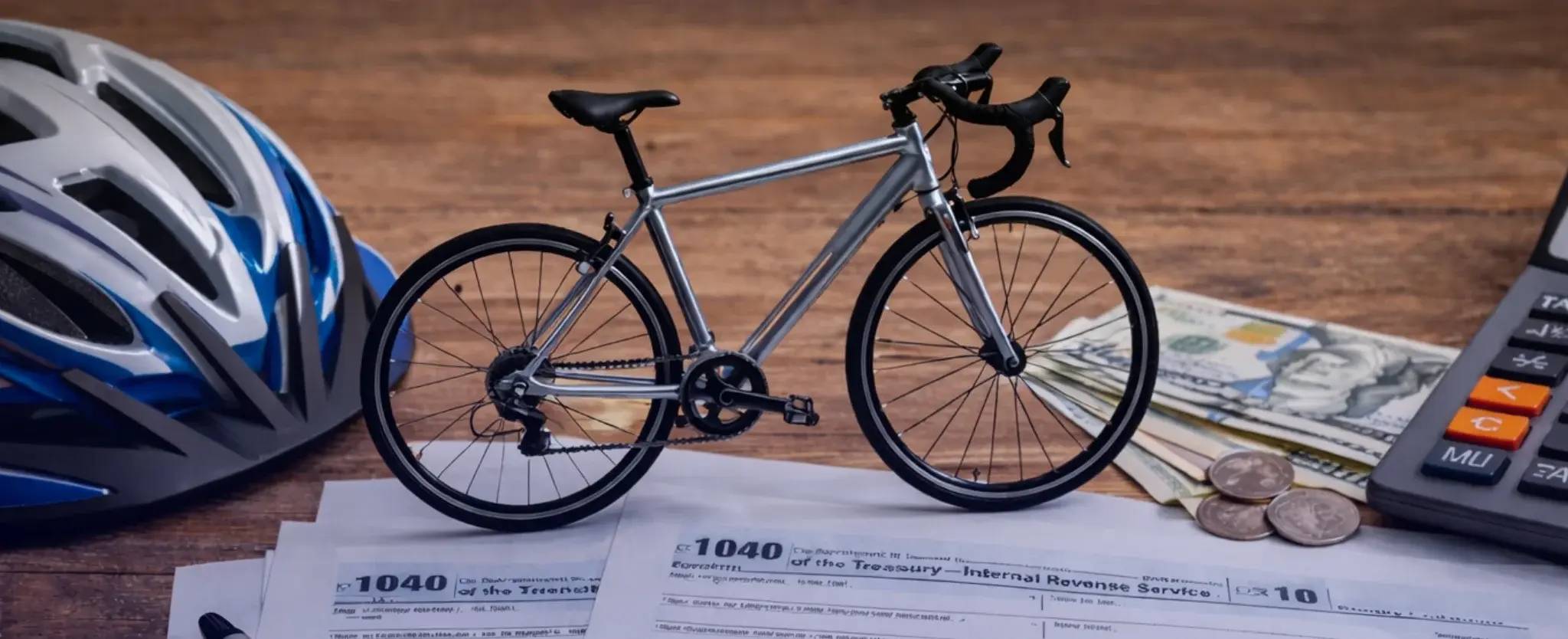
The federal government’s modest effort to encourage people to commute to work via bicycle has ended.
The One Big Beautiful Bill Act (OBBBA) has permanently eliminated the tax exclusions for qualified bicycle commuting reimbursements by employers.
Before the final nail went into the coffin, the Tax Cuts and Jobs Act suspended the bicycle commuting reimbursement fringe benefit for 2018-2025,
What is (was) the Qualified Bicycle Commuting Reimbursement?
To encourage people to ride bicycles to work, in the waning days of the Obama administration, Congress enacted a new employee transportation fringe benefit: the qualified bicycle commuting reimbursement.
Starting in 2009, employees could be reimbursed for reasonable expenses incurred for the purchase of a bicycle and bicycle improvements, repairs, and storage if the bicycle was regularly used for travel between the employee’s residence and place of employment.
There are several restrictions on this employee benefit:
- To qualify, employees had to use a bicycle for a substantial portion of the travel between their residence and workplace.
- It was available only for personal pedal-powered bicycles; that is, it did not cover bike shares or electric bicycles.
- Unlike other qualified transportation fringe benefits, the bicycle commuting reimbursement could not be offered in conjunction with other transportation fringe benefits, such as transit passes or parking benefits.
- Employers had until three months after the end of the calendar year to pay the reimbursement.
In short, the benefit was mainly for hardcore bikers who did not want to take the bus.
The bicycle commuting reimbursement was tax-free to the employee and didn’t have to be listed on the W-2. Unlike other transportation fringe benefits, it was tax-deductible to the employer.
The reimbursement amount was limited to $20 for each month the employee rode a bicycle to work. Thus, the maximum annual reimbursement was $240. This amount was not indexed for inflation.
TCJA Suspended the Qualified Bicycle Commuting Reimbursement
The bicycle reimbursement benefit was available from 2009 through 2017. The Tax Cuts and Jobs Act was enacted in 2017, and it suspended the reimbursement for 2018 through 2025.
- Although employers could continue to reimburse the employees for bicycle commuting expenses, the amounts were taxable income for the employees.
- Employers, however, could still deduct such reimbursements.
- Attempts to revive the bicycle reimbursement in 2020-2021 failed.
- Suspending the bicycle commuting benefit saved the federal government $10 million per year.
OBBBA Killed the Qualified Bicycle Commuting Reimbursement
The qualified bicycle commuting reimbursement was scheduled to return in 2026, but it did not.
When Congress enacted the OBBBA, it permanently eliminated the tax-code exclusion for qualified bicycle reimbursements.
- Reimbursements for bicycle commuting are now taxable wages to the employee for 2026 and later.
- Reimbursements are no longer deductible by employers for 2026 and later. (The employer may not treat bicycle reimbursement as deductible wages, making this a double tax – taxable to the employee, not deductible by the employer.)
Other qualified transportation fringe benefits, such as transit passes and qualified parking, remain excludable from an employee’s gross income.
These are much larger than the bicycle commuting reimbursement and cost the federal government far more: for 2026, employers may provide employees up to $340 per month tax-free for the purchase of transit vouchers, commuter highway vehicle fares, or qualified parking fees.
But the cost of these employee transportation benefits is not deductible by employers.
State benefits for bike riders
No state has ever offered a benefit comparable to the federal bicycle commuting reimbursement.
Several states have offered vouchers or rebates to individuals who purchase e-bikes. These include California, Colorado, Connecticut, Hawaii, Maine, Massachusetts, Minnesota, Rhode Island, Vermont, and Washington. But most of these programs have run out of money and are now near death.
As of now, bikers can’t expect much help from the government, although you now see more bike lanes.
BergerCPAFirst, with over 30+ years of experience, offers comprehensive tax preparation services for individuals and businesses nationwide. Our commitment is to provide personalized attention while ensuring compliance and maximizing tax benefits. If you have any questions or would like to schedule a consultation, please call (201) 587-9200 or send us an inquiry.
Client Login